A somatic Perspective on Video games: How certain games can offer regulation, agency & quiet companionship
About a 6-minute read. Find the TL;DR at the bottom!
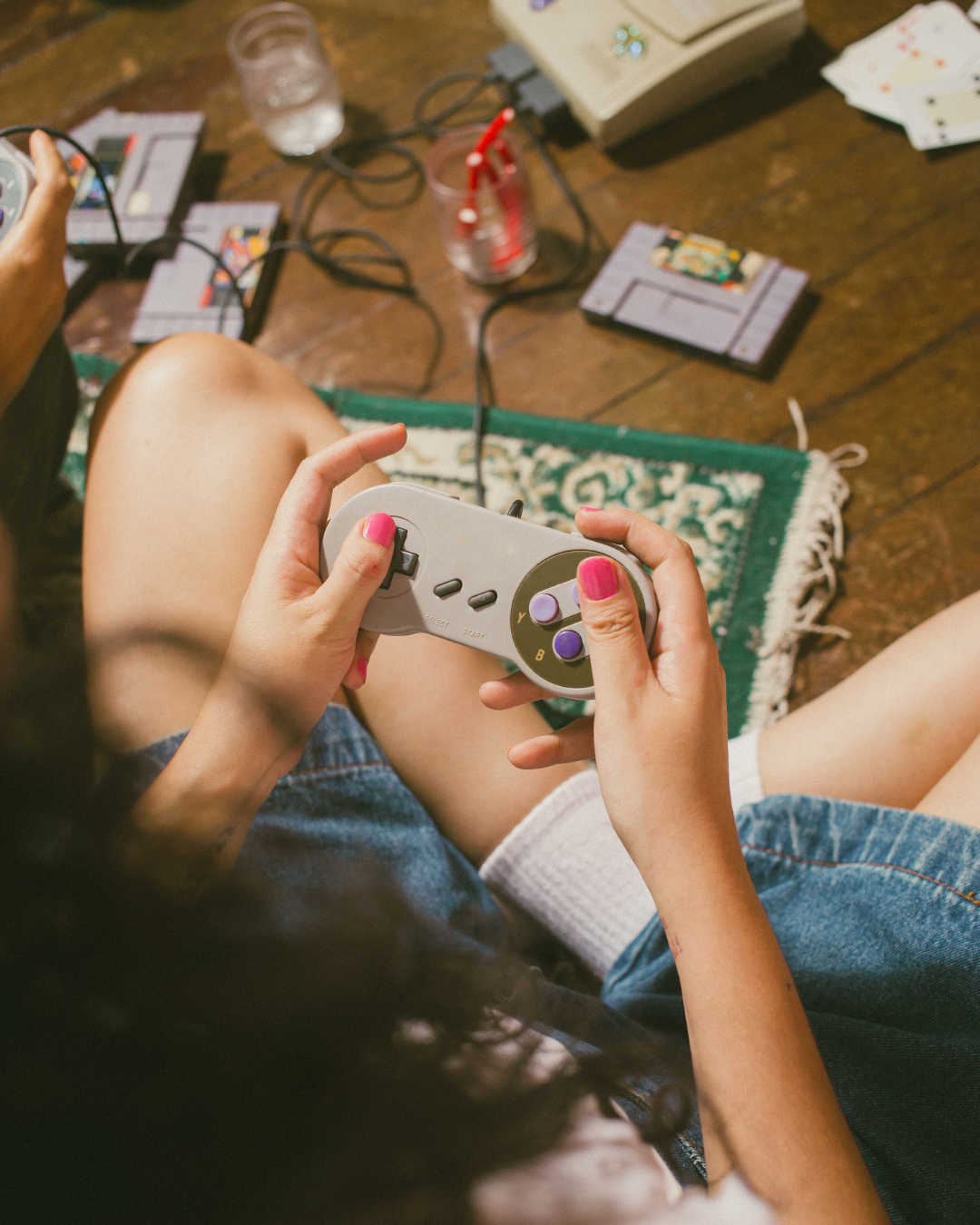
When we talk about regulation, we usually frame it as something that happens through insight, through processing, naming what we feel, finally understanding why something affected us the way it did, and sometimes that really does help. From a somatic perspective, regulation is also about whether the body has access to the conditions that make steadiness possible in the first place, whether there is enough rhythm, enough agency, enough containment to stay present without tipping into overwhelm.
In that sense, regulation is shaped by environment as much as it is by awareness. It is influenced by whether something lowers demand or quietly adds to it, whether you feel rushed or whether you are allowed to move at your own pace, whether there is something predictable to orient toward when everything else feels scattered or overstimulating.
Certain video games can create those conditions. They do not fix what is hard or replace emotional work, and they are not inherently regulating. What some of them offer is structure without urgency, choice without pressure, and a kind of steady companionship that does not require you to explain yourself in order to stay.
This piece explores that idea, how specific games can support regulation, restore agency, and provide quiet companionship in ways that are deeply embodied, even if we do not always name them that way.
What research has been noticing
Research over the past several years is starting to complicate the old idea that video games are inherently dysregulating or avoidant. Some studies suggest that certain kinds of gameplay are linked to lower stress, steadier mood, and a sense of competence and control. They can even feel supportive during grief or when life feels overwhelming.
The key isn’t that games are inherently “good” or “bad.” What matters is how they’re designed, how someone engages with them, and the season you’re in. Some games create spaces where your body can notice its own rhythm, where you can feel your energy and attention shift, where you can check in with what you can handle and what feels like too much. That’s the same kind of attunement to limits and capacity that we rely on in daily life, even outside of games.
Rather than being about fixes, research tends to point to qualities that overlap with how nervous systems regulate: predictable feedback, choice and autonomy, attention that engages the body, and emotional experience without heavy verbal demand. Those conditions let people practice noticing their own state, pacing themselves, and moving through challenge without being flooded or forced.
A somatic perspective on gaming
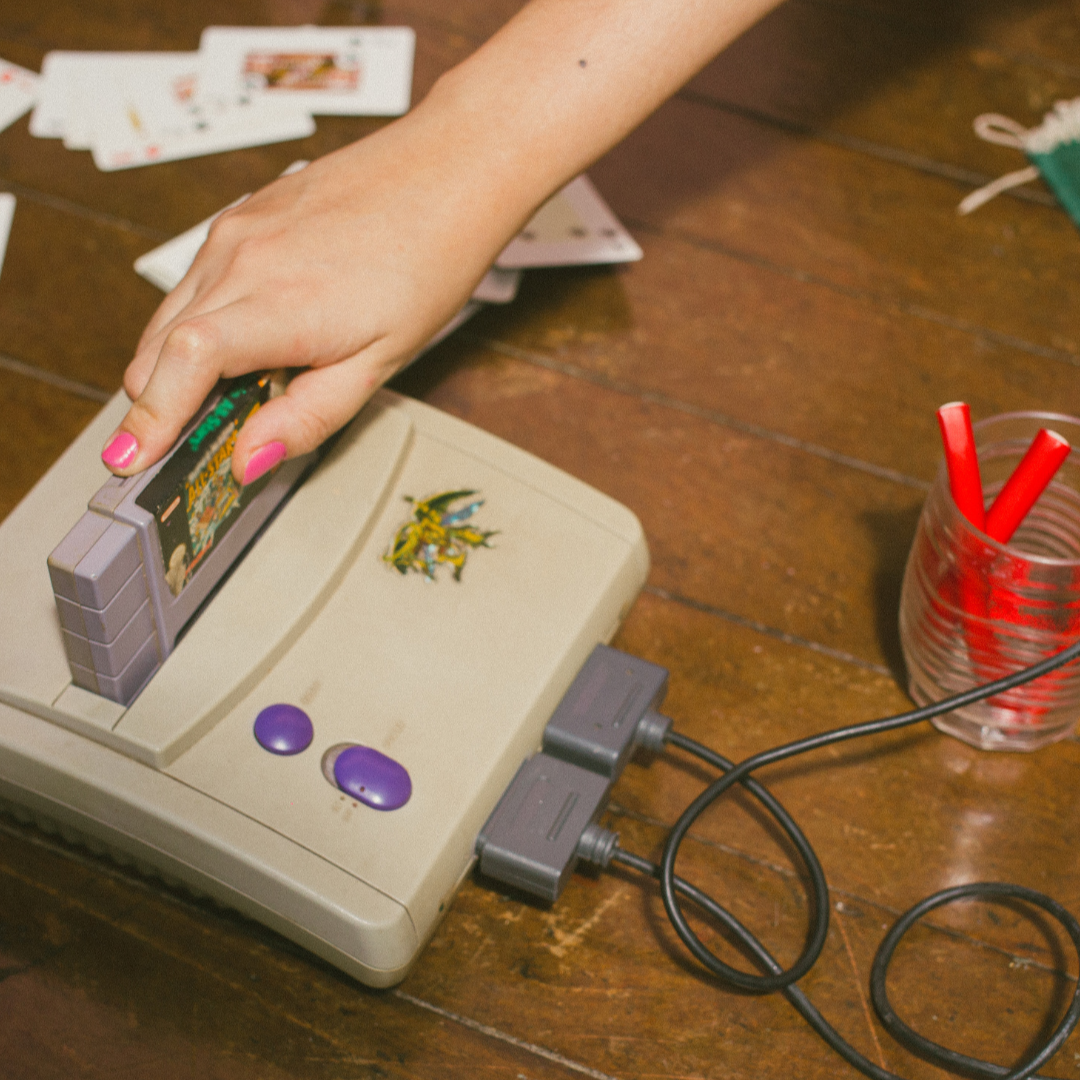
From a somatic and nervous-system-informed perspective, many of the games people experience as supportive have something important in common: they reduce pressure while increasing choice.
Support doesn’t usually come from figuring things out or having the “right” insight at the right time. More often, it comes from feeling safe enough to move at your own pace, to stay oriented, and to have some sense of control over what happens next. Environments that offer structure without urgency, predictable cause and effect, and room to pause tend to make stress feel more workable.
Many supportive games naturally offer this kind of experience. There’s agency where you get to decide how fast or slow to go, how close to get to challenge, and when to step back. There are predictability rules that make sense, feedback is consistent, and nothing arrives out of nowhere. And there’s embodied focus, where hands, eyes, breath, and attention work together in a contained way, which can help attention settle out of constant thinking and into something more grounded.
Often, there’s very little language involved. Emotion can be present without needing to be named, explained, or fixed. For systems that are already tired of talking or trying to make sense of everything, this kind of wordless engagement can feel more accessible and, for many people, more respectful.
This isn’t about using games intentionally as coping tools. It’s about noticing how certain environments already support nervous system flexibility by offering pacing, choice, and containment.
Three games, three different kinds of support
The Legend of Zelda: Breath of the Wild

Open exploration and restored agency
An expansive open world built around wandering, curiosity, and self-directed movement, with no rush and no required order.
Why this feels supportive:
Breath of the Wild offers choice without pressure. You decide where to go, how long to stay, and what matters in the moment, with the freedom to move quickly or slowly, follow a path or abandon it, pause when you need to, or change direction entirely.
That freedom can matter a lot for nervous systems that are used to feeling rushed, controlled, or cornered. Being able to orient yourself, take in the environment, and choose your next step can soften urgency and make things feel more manageable.
The game also allows for natural titration. You can approach challenge in small doses, step back when it feels like too much, and return when you have more capacity. Over time, this mirrors how people often learn to navigate stress in life, engaging without flooding, backing off before overwhelm, and trusting that they can come back when they’re ready.
This kind of wandering isn’t about escaping life. It’s about practicing flexibility, choice, and self-directed movement in a way that gently carries over into everyday moments of uncertainty and pressure.
Stardew Valley
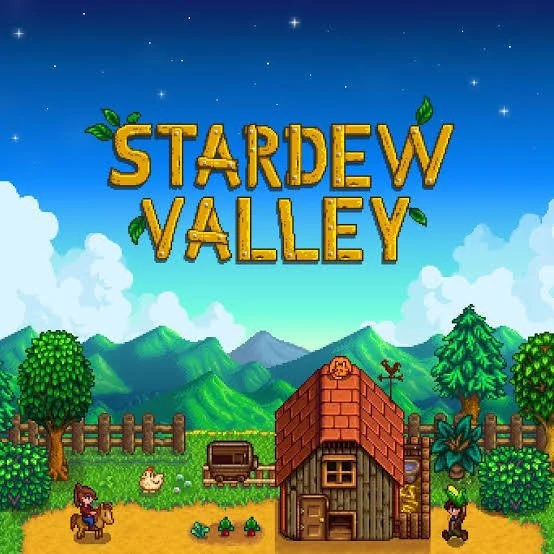
Routine, rhythm, and steadiness
A gentle farming and community game structured around repetition, predictability, and small daily tasks.
Why this feels supportive:
Stardew Valley leans into rhythm in a simple, consistent way. Days unfold predictably—wake up, tend crops, talk to familiar characters, rest—and progress happens through small, steady actions rather than big emotional pushes.
That predictability can be especially supportive during times of stress or emotional overload. When the outside world feels chaotic or uncertain, having something reliable to return to can quiet the nervous system’s need to constantly anticipate what’s coming next.
There’s also a steady sense of cause and effect without pressure. You plant something, care for it, and eventually see it grow. That gentle follow-through can counter feelings of helplessness or depletion, offering a way to cope that doesn’t require analysis, insight, or emotional effort.
Over time, this kind of rhythm can help people reconnect with their own pacing—learning when to engage, when to rest, and what “enough” feels like in their body.
Gris

Companionship in grief, without words
A wordless, visually soft journey through loss and change, told through color, movement, and music.
Why this feels supportive:
Gris doesn’t ask you to process, reframe, or move on. It doesn’t explain what you’re feeling or try to make it better. Instead, it stays.
The pacing is slow, the demands are minimal, and emotion is allowed to exist without being rushed toward clarity or resolution. This can matter deeply in grief, especially when meaning-making or encouragement feels intrusive or overwhelming.
The game offers presence rather than instruction. There’s room to feel without being pushed, and connection without expectation. For many people, this makes it easier to stay with emotion without tipping into overwhelm or shutting down.
It can also gently support awareness of internal shifts, changes in sensation, mood, or emotional tone without asking for interpretation. In everyday life, that same capacity often helps people respond to grief and stress with more care and less force.
In the Be.coming
Turning toward certain video games can be a way of tuning into your system and noticing what you need. They can help you sense your energy, understand what feels manageable, and move through experiences at a pace that feels steady and safe.
Games that offer rhythm, choice, and containment let you practice flexibility and agency in ways that carry over into everyday life. You can check in with your limits, respond to stress with more ease, and find steadiness in small, embodied ways.
Engaging with these kinds of environments is a form of care. It supports your nervous system, helps you navigate life’s pressures with more fluidity, and creates space to be present with what is happening. That attention to pacing, agency, and quiet steadiness is deeply intelligent, and it’s meaningful exactly as it is.
A note on nuance
Not everyone experiences video games as supportive. For some people, certain games feel overstimulating, activating, or disconnecting. For others, those same games feel grounding and settling. Support is individual and contextual. What matters most is how your body responds, not what an activity is supposed to do ◡̈
References
Most research on video games and mental health is correlational rather than causal, relies heavily on self-report, and varies widely in terms of game type and usage. There’s also limited research directly connecting video games to somatic or trauma-focused outcomes.
What is supported are the shared conditions of choice, pacing, predictability, and embodied attention, which tend to help people navigate stress with greater flexibility. That makes gaming an area worth curiosity and care, rather than dismissal or overstatement.
Przybylski, A. K., & Weinstein, N. (2021). Video game play is positively correlated with well-being. Nature Human Behaviour, 5(2), 202–210.
Pallavicini, F., Pepe, A., & Mantovani, F. (2022). Commercial video games for stress reduction: A systematic review. Frontiers in Psychology, 13, 884259.
Halbrook, Y. J., O’Donnell, A. T., & Msetfi, R. M. (2019). When and how video games can be good. Perspectives on Psychological Science, 14(6), 1096–1104.
Villani, D., Carissoli, C., Triberti, S., Marchetti, A., Gilli, G., & Riva, G. (2018). Video games for emotion regulation: A systematic review.Games for Health Journal, 7(2), 85–99.
Gentle Reminder
This blog is meant to be educational and it is not a replacement for therapy or professional care. If something here stirs big feelings, I encourage you to bring it to a trusted therapist or support in your community. You do not have to sort through it all alone.